


The Best Places to See the Northern Lights in Wisconsin
Northern Lights, also called the Aurora Borealis, form a natural light display created when charged particles released by the sun collide with gases in Earth’s upper atmosphere.
Most aurora activity appears close to the Arctic Circle. Strong geomagnetic storms can expand the viewing zone farther south across North America. During these events, auroras may become visible across parts of the Midwest, including Wisconsin.
Wisconsin offers favorable conditions for aurora viewing compared with many other Midwestern states. Northern latitude places the state closer to the auroral oval, an area around Earth’s magnetic poles where auroras appear most often.
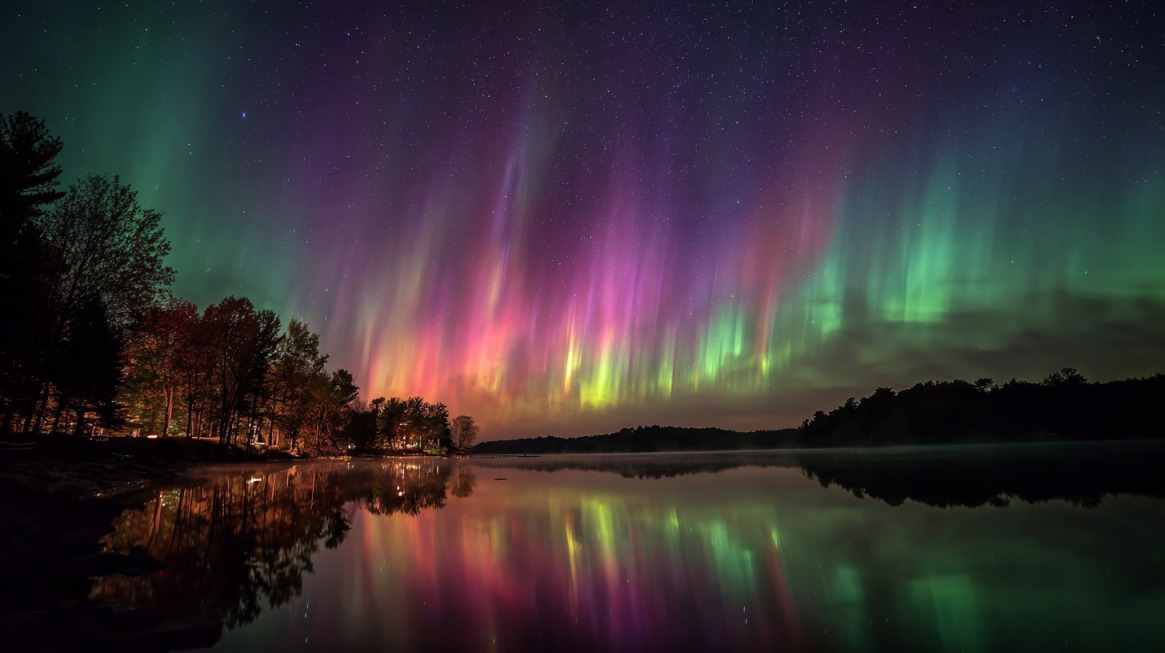
During strong solar storms, observers may see glowing bands of light near the horizon or sweeping arcs stretching across large portions of the sky.
Several parks, forests, and lakeshore areas across Wisconsin offer excellent viewing conditions during active geomagnetic periods.
Door County
Door County frequently appears among top aurora viewing destinations in Wisconsin. Peninsula geography places water on both sides of the region. Green Bay lies to the west, while Lake Michigan borders the eastern side.
Large open shorelines provide wide sky views without buildings blocking the horizon. Northern sections of the peninsula contain smaller communities and lower levels of artificial lighting.
Several locations within the county offer especially favorable nighttime viewing environments.
Washington Island offers some of the darkest skies in the region. Wide views across Lake Michigan create strong conditions for observing faint aurora glows and photographing colorful light displays.
Apostle Islands and Bayfield Area
@ericakost The Apostle Islands, located in Lake Superior off the northern coast of Wisconsin, are a group of 22 stunning islands known for their natural beauty, diverse ecosystems, and historic landmarks. These islands feature towering sandstone cliffs, sea caves, pristine beaches, and old-growth forests. The area is a haven for outdoor enthusiasts, offering kayaking, hiking, sailing, and camping opportunities. Visitors can explore historic lighthouses, some dating back to the 19th century, as well as abundant wildlife, including eagles, black bears, and migratory birds. The Apostle Islands National Lakeshore preserves this breathtaking landscape, making it a must-visit destination for nature lovers. #wisconsin #apostleislands #travel #travelwithkids #roadtrip #rvlife #rvlifewithkids #momlife #stayathomemom #fyp ♬ original sound – Erica Kost || Mindful Mom of 3
Bayfield and the Apostle Islands sit along the southern shore of Lake Superior in northern Wisconsin.
Position near the northern border places this region closer to the typical aurora zone than most areas in the state.
Lake Superior creates a massive open horizon stretching toward Canada. Large unobstructed views increase the chances of spotting faint aurora activity during geomagnetic storms.
Remote coastal areas and island shorelines produce very dark nighttime conditions. Limited artificial lighting allows subtle aurora colors to appear more visible in the sky.
Photographers often choose this region because water surfaces can enhance visual effects during strong aurora events. Calm nights may create reflections across Lake Superior that produce striking nighttime images.
Chequamegon-Nicolet National Forest
@coddiwomple_chronicles 📍Chequamegon-Nicolet National Forest in Northeastern Wisconsin If you’re looking for an outdoor adventure, this region should be at the top of your list! 🥾 HIKE – there are multiple pull offs and unmarked trailheads around HWY 55 & the Wolf river. Must stop: Big Smokey Falls 🗼 CLIMB – this tower served as a fire lookout! The total elevation of the site & the 100 foot tower is 1,380 ft above sea level! Must stop: Mountain Fire Lookout Tower 🎣 FISH – over 50 species of fish can be found in this area…they are found in the 2,000 miles of stream (nearly 1,400 miles are classified as trout water) and the 600 lakes that are greater than ten acres 😮 🛟 FLOAT – go float on the “lazy” portion of the Wolf river (there’s a few small rapids to navigate!) We opted to start at River Forest (where we stayed!) @riverforestcampground 🚣 PADDLE – take on the whitewater of the Wolf or Red! Guided and non-guided services available. Sadly the outfitter we went with is no longer is business so check out Herb’s or Shotgun Eddy! Bonus!! 🛺 RIDE – ATV and UTV rentals are available in various towns around the area with access to many trails! Lengths of trails vary (upwards of 50 miles long!) This is an activity we didn’t get to…next time! . . . #cheqaumegonnationalforest #nationalforest #wisconsingirl #northernwi #northeastwi #whitelakewi #wisconsinnorthwoods #upnorthwisconsin #upnorthwi #wisconsinadventures #discoverwisconsin #visitwi #travelwi #discoverwi ♬ original sound – coddiwomple_chronicles
Chequamegon–Nicolet National Forest covers more than one million acres across northern Wisconsin. Vast, undeveloped areas create extremely dark skies and quiet viewing environments.
Dense forests, scattered lakes, and remote campgrounds allow visitors to find many locations suitable for nighttime sky observation.
Several natural features within the forest support aurora viewing.
- minimal artificial lighting across large areas
- numerous lakes with open sky visibility
- remote campgrounds suitable for overnight observation
Aurora watchers often choose lakeshores or open clearings where trees do not block the northern horizon. Clear skies combined with dark surroundings can make faint aurora bands easier to detect.
Harrington Beach State Park
View this post on Instagram
Harrington Beach State Park lies along Lake Michigan, roughly forty minutes north of Milwaukee.
Proximity to the lake creates open viewing directions across water toward the northern sky.
Urban lighting decreases significantly outside Milwaukee’s metropolitan area. Darker skies near the shoreline improve visibility during strong geomagnetic storms.
Several features attract aurora watchers to this park.
- wide lakefront beach areas
- accessible parking near the shoreline
- darker skies compared with nearby suburbs
Kettle Moraine State Forest
Kettle Moraine State Forest stretches across southeastern Wisconsin. Rolling hills created by ancient glaciers provide elevated viewpoints that improve visibility of the northern horizon.
Northern Unit areas include several scenic overlooks where observers can watch the night sky across wide distances.
One location in particular attracts many visitors interested in astronomy.
- highest natural elevation in southeastern Wisconsin
- observation tower offering wide sky visibility
- darker forest surroundings away from city lighting
Devil’s Lake State Park
Devil’s Lake State Park ranks among Wisconsin’s most visited natural areas. High quartzite bluffs rise above the lake and surrounding terrain, providing excellent viewpoints for sky observation.
Several hiking trails lead to scenic overlooks positioned high above the water. Elevated locations allow observers to see wide sections of the night sky.
- high bluff overlooks above the lake
- open sky visibility across large areas
- darker skies compared with nearby urban regions
Strong geomagnetic storms occasionally produce aurora glows visible above the bluffs. Clear skies combined with higher elevation can improve chances of detecting faint color bands.
Why Wisconsin Is a Good Place to See the Northern Lights
Several geographic and environmental factors increase the chances of aurora visibility across Wisconsin. Position in the northern United States, large rural regions, and extensive lakeshores all contribute to favorable viewing conditions.
Strong solar storms can occasionally push aurora activity far enough south for observers across the state to witness glowing colors in the night sky.
Aurora viewing requires three main conditions: active solar storms, dark skies, and a clear northern horizon. Many areas across Wisconsin provide these conditions more often than other Midwestern locations.

Northern Latitude and the Aurora Oval
Geographic position plays a major role in aurora visibility. Wisconsin sits closer to the auroral oval than many states in the central United States. Auroral oval describes a ring-shaped zone surrounding Earth’s magnetic poles where auroras appear most frequently.
Charged particles ejected during solar storms travel toward Earth and interact with the planet’s magnetic field.
Energy released during this process produces glowing light displays high in the atmosphere. Activity normally remains concentrated near polar regions. Strong geomagnetic storms can expand that zone farther south.
During these periods, aurora activity may extend into the northern United States. Northern sections of Wisconsin often experience stronger visibility because they lie closer to typical aurora zones.
Regions near Lake Superior often provide some of the best viewing opportunities in the state. Several geographic advantages contribute to this.
Aurora displays visible in these areas sometimes begin as faint green bands along the northern horizon before expanding higher into the sky.
Wide Open Areas and Lakeshores
Clear viewing directions play a crucial role in spotting auroras. Large forests, farmland, and long shorelines across Wisconsin provide open sky views that improve visibility during geomagnetic storms.
Aurora displays frequently begin low along the northern horizon. Open terrain helps observers detect faint light bands that might otherwise remain hidden behind trees, hills, or buildings.
Long stretches of water create especially favorable viewing conditions. Lakes remove many visual obstacles that often block sky visibility in inland areas. Several major bodies of water provide these advantages across Wisconsin.
Water surfaces also enhance night photography. Aurora colors appearing above calm water may create mirrored glows that add dramatic visual depth during long-exposure images.

Dark Skies and Limited Light Pollution
Artificial lighting can easily overpower faint astronomical events. Bright streetlights, buildings, and highway traffic create skyglow that reduces contrast in the night sky.
Large portions of northern Wisconsin contain small communities separated by forests and lakes. Limited urban development produces darker skies than many metropolitan areas.
Several regions across the state offer especially favorable nighttime conditions for stargazing and aurora observation.
- Door County shoreline locations
- Chequamegon–Nicolet National Forest
- remote state parks across northern Wisconsin
Darker skies allow subtle aurora activity to become visible to the human eye. Faint green glows or red arcs that remain invisible near city lights may appear clearly in these rural environments.
Astronomy enthusiasts frequently visit these locations because additional celestial events become easier to see.
- dense star fields across the Milky Way
- seasonal meteor showers
- faint aurora glows during geomagnetic activity
Clear dark skies remain one of the most important ingredients for successful aurora viewing.
Solar Activity Cycles
Aurora displays depend heavily on solar activity. Sun regularly produces bursts of energy that release charged particles into space. Some of these particles travel toward Earth and interact with the planet’s magnetic field.
Solar behavior follows an activity cycle lasting about eleven years. Activity increases gradually during each cycle before reaching a peak period marked by stronger solar storms.
Peak years in the cycle produce increased aurora visibility across the Northern Hemisphere. Strong geomagnetic storms during these periods can expand aurora zones farther south across North America.
Periods of stronger solar activity can produce several effects that improve aurora visibility in Wisconsin.
Auroras visible during these active periods sometimes reach much farther south than usual. Wisconsin occasionally experiences these displays during strong storms, especially in darker rural regions.
Multiple viewing opportunities may occur during active solar years, increasing the chances that observers across the state will witness aurora activity.
When to Plan a Northern Lights Trip in Wisconsin

Aurora visibility depends mainly on solar activity and geomagnetic storm strength. Charged particles released during solar eruptions travel toward Earth and interact with the planet’s magnetic field. Energy released during these collisions produces glowing aurora colors in the upper atmosphere.
Stronger solar storms increase the likelihood that auroras will appear across the northern United States. Wisconsin occasionally experiences these events during active geomagnetic periods.
Several conditions can improve the chances of witnessing an aurora display.
- strong geomagnetic storm forecasts
- clear skies with minimal cloud cover
- dark locations away from city lighting
Northern Wisconsin often provides the best opportunities because it lies closer to the typical aurora zone. Rural areas with limited artificial lighting allow faint colors to appear more clearly.
Season also plays a role in viewing conditions. Winter often offers longer nights, which increases the time available for aurora activity. Cold air and clear skies may also improve atmospheric clarity during calm weather patterns.
Powerful geomagnetic storms occasionally allow auroras to reach much farther south. Rare events have produced visible displays near major cities such as Milwaukee. Dark rural viewing areas still provide stronger visibility since urban lighting can overpower faint aurora colors.
Summary
Wisconsin provides strong opportunities for aurora viewing compared with many other Midwestern states.
Northern latitude places the state closer to common aurora zones, while extensive lakeshores and rural regions create clear views of the northern lights.
Northern counties, Lake Superior shores, dark-sky parks, and remote forests usually produce the best viewing conditions.
Newport State Park, Door County, the Apostle Islands region, and Chequamegon–Nicolet National Forest frequently appear among the top locations for nighttime sky observation.