


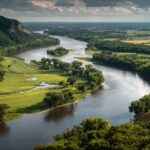

Why the Mississippi River Valley is the Best Kept Secret in the State
The Mississippi River Valley ranks among the most remarkable natural areas in the United States, yet many travelers overlook it. Mississippi River, the third-longest river in North America, stretches about 2,350 miles between Lake Itasca in Minnesota and the Gulf of Mexico.
Immense river systems connected to it create one of the most biologically productive freshwater networks on Earth.
Many people view the river mainly as a transportation corridor used for shipping and trade. Broader attention to the valley reveals far more than commercial activity.
Vast natural settings, thriving wildlife habitats, and wide outdoor recreation options make the Mississippi River Valley one of the most impressive yet underestimated areas in the country.
With all this in mind, let us take a look at why the Mississippi River Valley is the best-kept secret in the country, without a doubt.
Outdoor Recreation Opportunities
The Mississippi River Valley offers a wide range of outdoor activities that attract visitors across the United States. Long sections of flowing water, protected natural areas, and miles of shoreline create ideal conditions for recreation throughout the year.
Popular activities along the river include water travel, wildlife observation, and overnight camping.
- canoeing along quiet backwater channels
- kayaking through side channels and river bends
- freshwater fishing along riverbanks and tributaries
- hiking on forest trails near floodplain areas
- camping on river islands and sandbars
- birdwatching along wetlands and migration corridors
Paddling activities remain among the most popular experiences in the Mississippi River Valley.
Side channels, sloughs, and backwaters create long routes suitable for both beginners and experienced paddlers. Many paddlers travel sections of the Great River Road water trails where rest stops and launch points exist along the river.
Fishing opportunities remain extensive because large fish populations live in the river system. Anglers often target several species that thrive in the Mississippi River environment.
- catfish
- bass
- northern pike
- walleye
- crappie
Camping also plays a major role in outdoor recreation throughout the Mississippi River Valley.
River islands and sandbars provide primitive camping opportunities that feel remote despite nearby towns and cities. Several parks and recreation areas support overnight stays and outdoor activities along hundreds of river miles.
| Location | State | Key Features |
|---|---|---|
| Itasca State Park | Minnesota | More than 50 miles of hiking trails and over 200 campsites. |
| Wyalusing State Park | Wisconsin | Located above a 500-foot bluff overlooking the river backwaters. |
| Pere Marquette State Park | Illinois | Offers hiking, fishing, and boating opportunities. |
Recreation along the Mississippi River Valley combines water travel, wildlife observation, and overnight outdoor experiences, creating one of the most extensive outdoor recreation corridors in the United States.
Vast and Diverse Natural Areas
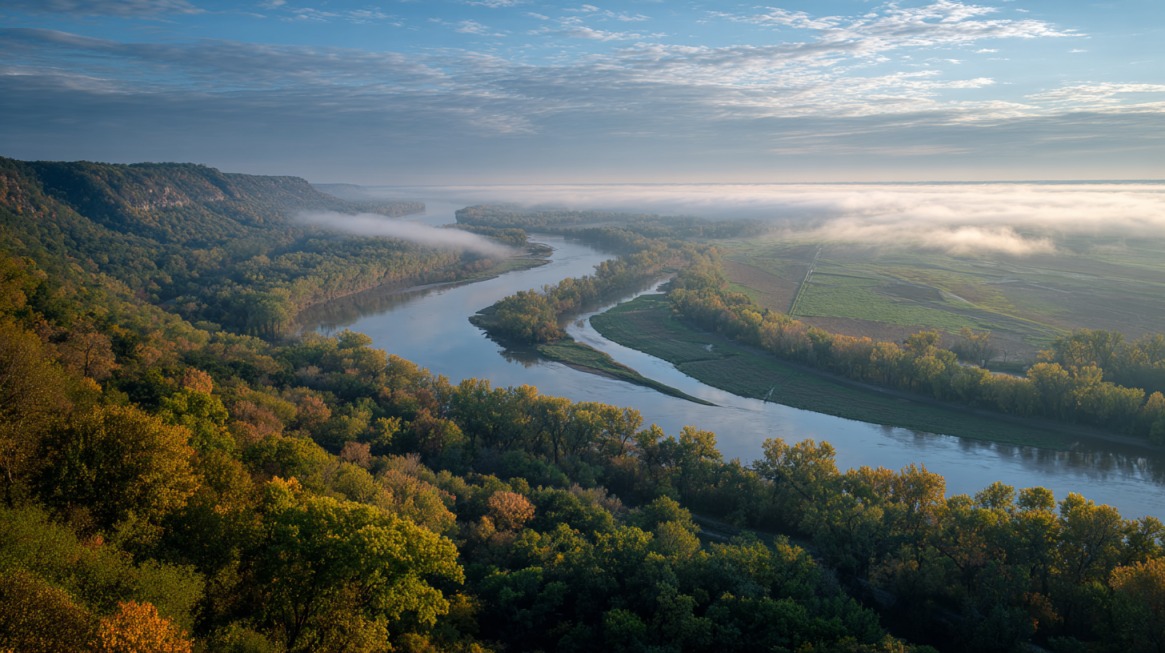
The valley belongs to a massive drainage basin that covers portions of 31 U.S. states and forms one of the largest freshwater systems on Earth.
Water flowing into the Mississippi River basin drains nearly 41% of the contiguous United States, demonstrating the enormous geographic scale of this river network.
Numerous ecosystems exist throughout the Mississippi River Valley, creating varied environments that support wildlife and plant communities across the region.
- wetlands
- floodplains
- forested riverbanks
- sandbars and river islands
- backwater lakes and side channels
@oneminutetours What a wondrous thing to have the mighty Mississippi River right here in Minnesota. From the 18-foot-wide headwaters in Itasca State Park, it gains speed (and thousands of gallons of water) as it races 694 miles through Minnesota and 2,552 miles total before reaching the Gulf. Brought to you by @NMDP #mississippiriver #minnesota ♬ original sound – John O’Sullivan
Floodplain environments contain channels, small lakes, wetlands, and forested areas that support aquatic and land species throughout the river corridor.
Large ecological variety supports extensive wildlife populations. Roughly 25% of all fish species in North America live inside the Mississippi River system. Floodplains and wetlands along the Mississippi River Valley also play a critical role in maintaining ecological balance.
- habitat for fish, amphibians, reptiles, and birds
- spawning and nursery areas for fish populations
- nutrient cycling that maintains water quality
- seasonal flood storage that protects nearby communities
Floodplain forests and wetlands, therefore, maintain vital natural processes that support wildlife and freshwater ecosystems across the continent.
Wildlife and Biodiversity
View this post on Instagram
Seasonal migration patterns depend heavily on this river corridor, especially through the Mississippi Flyway. Hundreds of bird species travel along this route between northern breeding areas and southern winter habitats.
Migration through the Mississippi River Valley includes approximately 325 bird species that rely on the river corridor during seasonal movement.
Many types of birds travel along this pathway each year. Examples frequently observed in river wetlands and forests include:
- bald eagles
- pelicans
- herons
- ducks
- geese
- sandhill cranes
Habitats within the valley support far more than migratory birds. Wetlands, forests, and river channels provide living space for hundreds of wildlife species.
- more than 150 fish species
- around 40 freshwater mussel species
- about 50 amphibian and reptile species
- more than 360 bird species
Large wildlife populations make the Mississippi River Valley one of the most rewarding locations in the United States for birdwatching and wildlife observation.
Scenic River Views and Hidden Natural Beauty
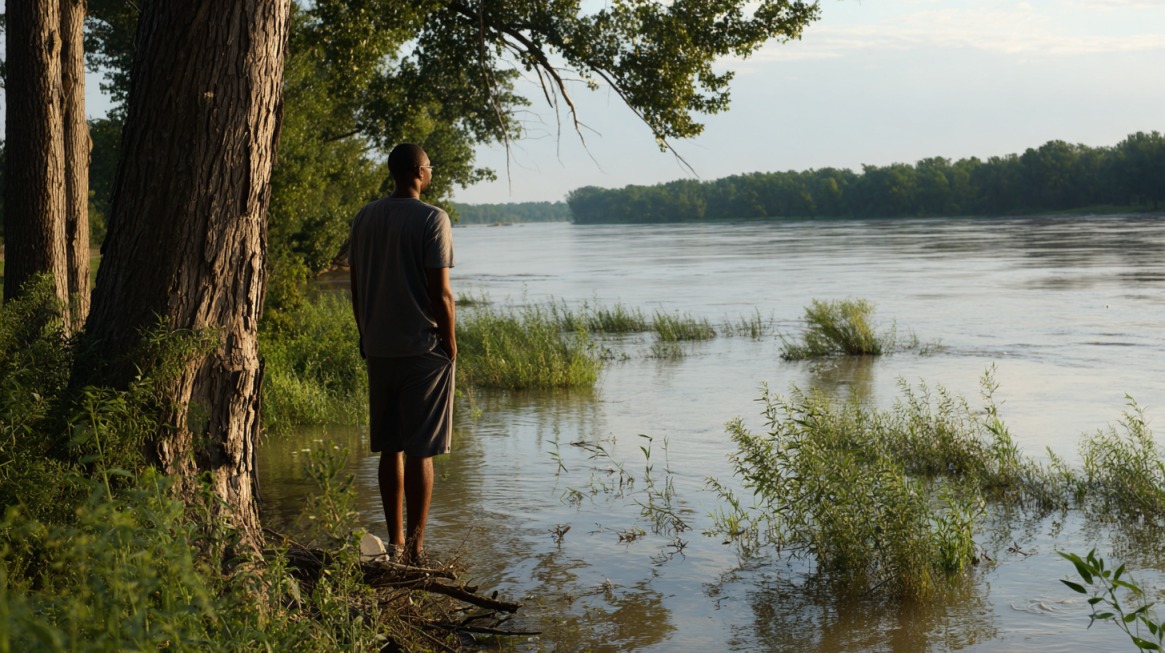
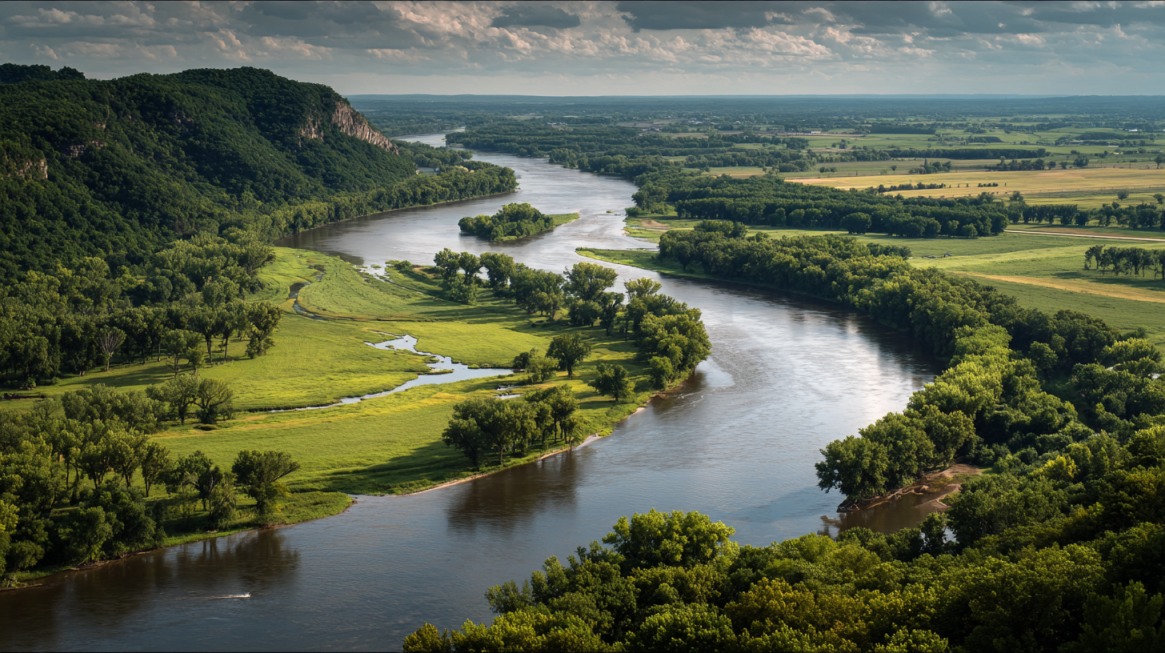
Many people assume the Mississippi River exists mainly as a commercial shipping route used by barges and freight traffic. Visits reveal quiet natural areas that surprise many travelers.
Forested floodplain regions and wetlands continue to exist along long sections of the river.
Seasonal flooding repeatedly reshapes riverbanks and surrounding lowlands. Floodwaters create extensive backwater swamps and wetlands where water-tolerant trees such as cypress, tupelo gum, water oak, and red maple grow.
- quiet backwater channels
- wooded river islands
- remote sandbars
- floodplain forests
- slow-moving side channels
Constant movement of water and sediment reshapes river channels and shoreline areas over time. Changing river conditions create new sandbars and islands while altering older sections of the river corridor.
Visitors often discover calm, natural areas only a short distance away from busy commercial river routes.
Environmental Importance of the River Valley
Drinking water for nearly 20 million people depends on this river system, making its health critical for millions of communities.
Thousands of tributaries and smaller streams connect to the Mississippi River system, forming one of the most complex freshwater networks on Earth. Large floodplain regions and wetlands support essential ecological processes that maintain water quality and wildlife habitat.
Wetlands and floodplains along the Mississippi River Valley perform several natural functions that protect both wildlife and nearby communities.
- filtering pollutants and improving water quality
- absorbing excess water during storms and floods
- replenishing groundwater supplies
- providing breeding and feeding areas for wildlife
Floodplain wetlands act as natural flood protection systems by storing excess water during heavy rainfall and reducing downstream flooding. Conservation programs across the Mississippi River basin focus on restoring wetlands and reconnecting floodplain areas with the river.
Summary
The Mississippi River Valley combines a massive geographic scale with important ecosystems and abundant outdoor recreation opportunities. Wetlands, forests, wildlife corridors, and waterways create one of the most significant ecological regions in North America.
Many travelers still overlook the Mississippi River Valley despite its environmental importance and natural beauty.
Strong wildlife presence, extensive outdoor activities, and vast natural environments show why the Mississippi River Valley deserves recognition as one of the best-kept secrets in the state.