




How to Spot Elk, Moose, and Albino Deer – Wisconsin’s Big Three
Wisconsin supports several cervid species, including white-tailed deer, reintroduced elk, rare moose visitors, and uncommon genetic deer types such as albino and piebald individuals.
Accurate target identification plays a critical role during any hunt.
Shooting an elk without the proper tag can lead to heavy fines and loss of hunting privileges. Albino deer receive full legal protection under state law.
Ethical hunting depends on clear recognition of animals in sight and awareness of surroundings before any shot is taken.
Elk vs. White-Tailed Deer
Clear distinction between elk and white-tailed deer remains essential during any season, especially in low light or long-distance situations.
Both species may share overlapping habitats at times, yet physical traits, behavior, and markings provide reliable ways to tell them apart before any shot decision occurs.
Size Differences
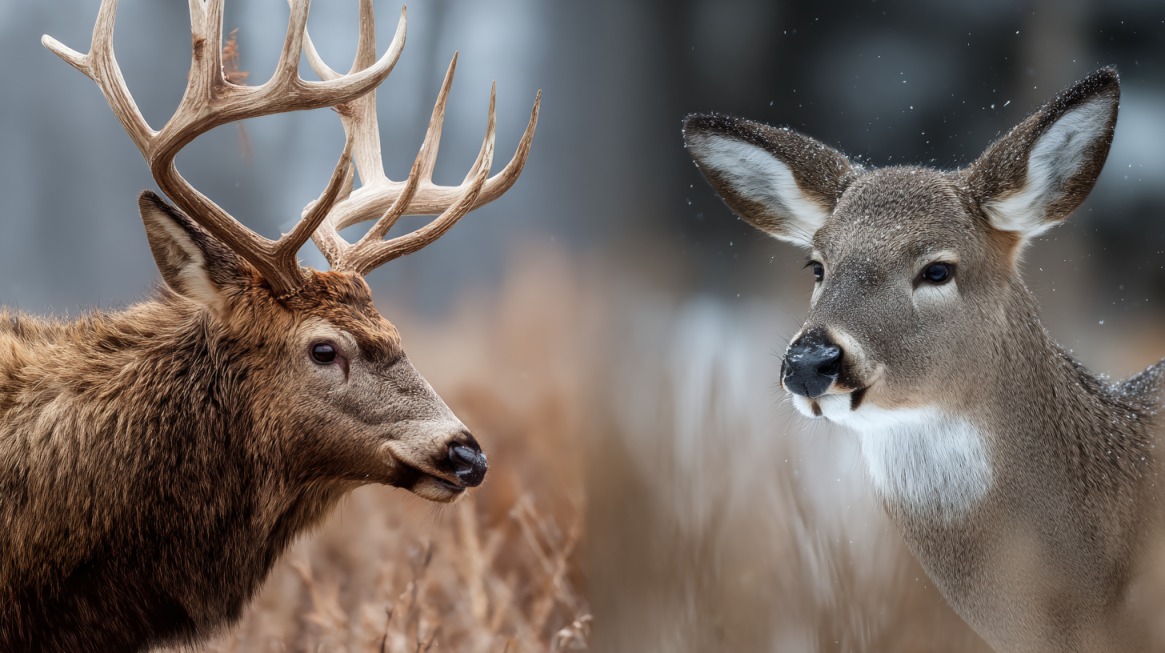
Adult elk present a much larger frame than white-tailed deer, creating one of the fastest visual cues in the field.
Height and mass differences become most noticeable when animals appear side by side or near trees and brush that provide scale.
- Shoulder height that exceeds white-tailed deer by one to two feet
- Longer legs paired with a heavier chest and thicker neck
- Calves that resemble adult does in height but still carry elk proportions and coat tones
Calves often confuse early fall hunts, yet leg length, head shape, and overall posture still signal elk identity.
Antler Characteristics
Antler structure offers another dependable comparison point, especially during the rut.
White-tailed deer antlers follow a compact and forward-curving pattern, while elk antlers expand outward and backward.
- Forward-angled tines on white-tailed deer
- Broad, sweeping beams on the elk that extend behind the head
- Larger overall antler mass on elk, even in younger bulls
Antler spread and direction become easier to judge when animals turn sideways or lower their heads to feed.
Coloration and Body Markings
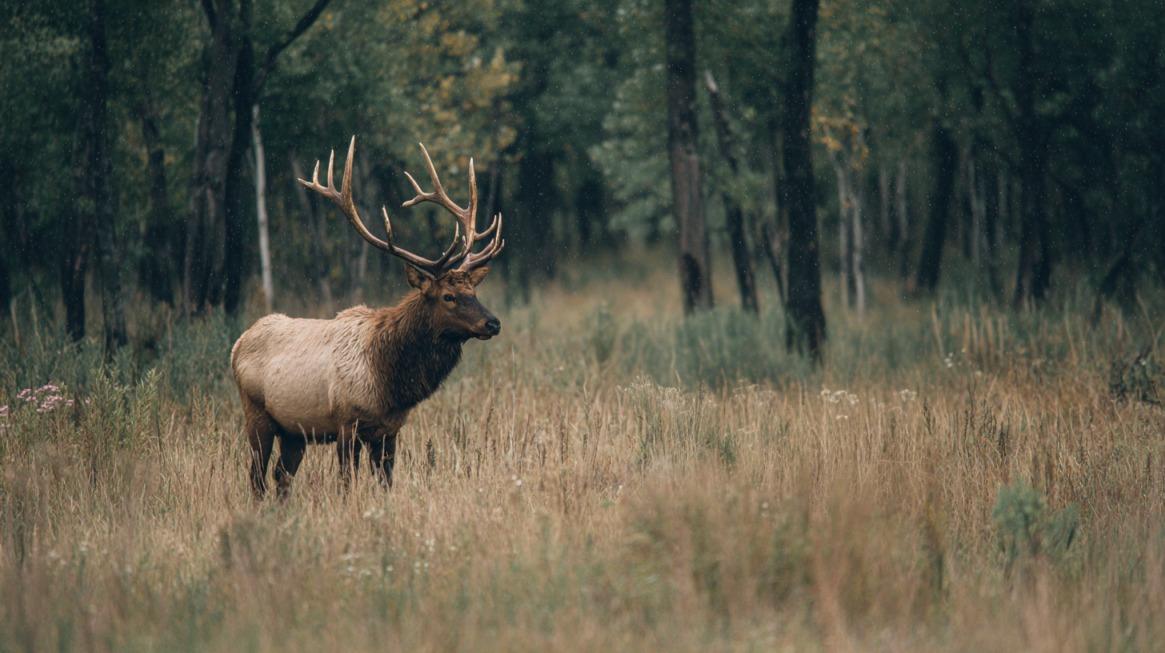
Body coloration separates elk and deer even at extended ranges. Elk coats shift sharply between light and dark zones, creating strong contrast.
- Tan rump patch that remains visible even at a distance
- Dark brown mane along neck and shoulders
- Black coloration on lower legs
White-tailed deer show more uniform coloring, with legs matching body shade, a distinct white throat patch, and a bright white tail that lifts when alarmed.
Additional Identifiers
Monitoring equipment offers a clear warning sign that an animal falls outside legal harvest limits.
Wildlife officials use visible tools to track elk movements and health.
- Orange collars placed around the neck
- Numbered identification tags attached to collars
- Colored ear tags designed for long-term monitoring
Any animal carrying such equipment should never be targeted.
Seasonal Movement
Elk behavior shifts during the autumn breeding season, increasing the chance of sightings outside established management zones.
Increased movement often leads to brief appearances in unfamiliar areas.
Extra caution remains necessary during fall hunts statewide, even in regions not commonly associated with elk activity.
Moose Sightings in Wisconsin
View this post on Instagram
Moose encounters generate excitement and confusion due to rarity within state boundaries.
Accurate recognition becomes critical since legal protection applies at all times.
Current Moose Presence
Wisconsin does not host a resident moose population, and no reintroduction effort exists.
Individual animals occasionally wander into northern counties, usually originating in neighboring regions.
Such sightings remain infrequent and closely monitored by wildlife agencies.
Physical Traits of Moose
Moose surpass elk and deer in size, creating a towering and unmistakable silhouette.
- Long legs that create a high, stilted appearance
- Massive body with a noticeable shoulder hump
- Broad nose with a drooping profile
- Bell-shaped flap of skin hanging under the throat
Movement often appears slow and deliberate, further separating moose behaviorally.
Legal Status
Full legal protection applies statewide, with no exceptions. Harvesting a moose carries serious penalties.
Reporting sightings through official wildlife observation systems assists agencies in tracking movement patterns and maintaining public safety.
Albino and Piebald Deer
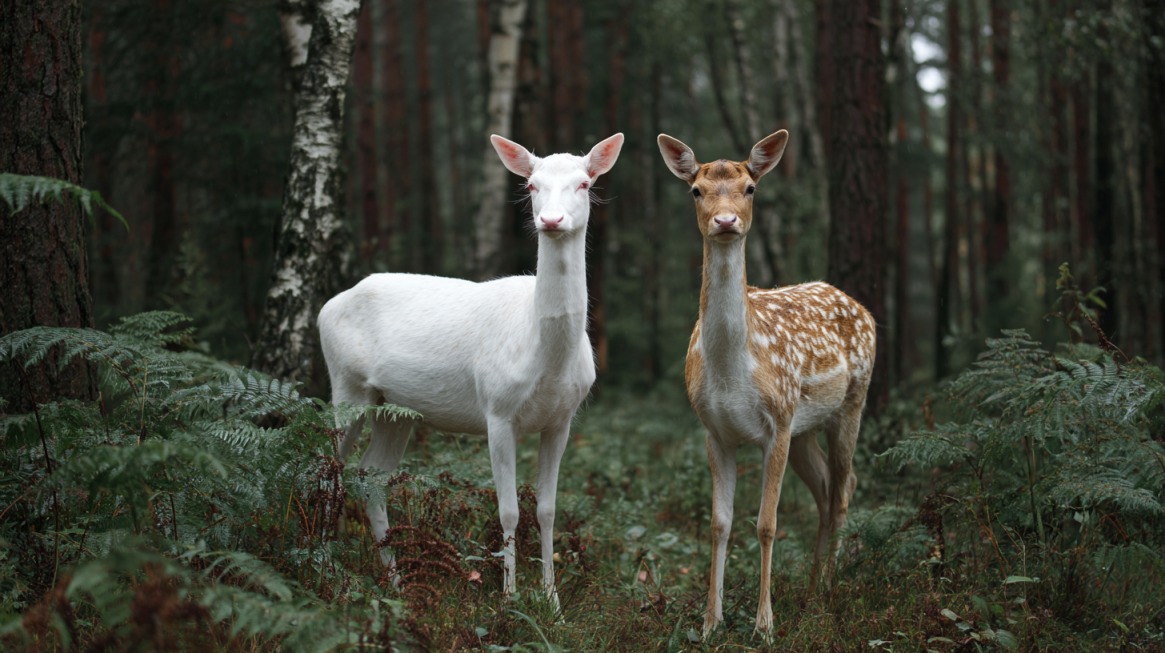
Genetic color variations in white-tailed deer attract attention due to their striking appearance and legal restrictions.
Accurate identification protects both hunters and rare animals.
Albino Deer
True albino deer lack all pigmentation. Coat color appears completely white, and facial features show pink coloration due to visible blood vessels.
Absence of pigment results directly from a recessive genetic trait passed through generations.
Piebald Deer
Piebald deer display partial pigment loss rather than complete absence.
White patches mix with natural brown coloration, producing irregular patterns that vary widely among individuals.
Genetic mutation causes the condition, separate from albinism.
Rarity and Occurrence
Statistical rarity adds to the importance of correct identification.
- Albino deer appear roughly once in every 30,000 white-tailed deer
- Piebald deer account for fewer than two percent of the population
- Higher reported albino frequency in the northern parts of the country
Such low numbers increase conservation value and legal protection.
Physical Challenges
Many albino and piebald deer experience developmental issues linked to genetic traits.
- Arched or curved spines
- Shortened jaws affect feeding
- Deformed hooves that limit mobility
- Vision impairments
White coloration also increases visibility to predators and humans, raising survival risks.
Legal Protection
Wisconsin law strictly prohibits the harvest of albino deer under any conditions.
Similar protections exist across several Midwestern and Southern states, reinforcing the need for careful observation before any shot.
Why Target Identification Matters
Correct identification forms a foundation of ethical and lawful hunting.
Consequences affect safety, legal standing, and long-term wildlife health.
Hunter Safety
Accurate recognition lowers the risk of accidental shootings and prevents harm to protected animals.
Safe hunting practice requires complete certainty before firing and constant awareness of surroundings after selecting a target.
Legal Consequences
Violations involving elk or albino deer carry severe outcomes that extend well past a single season.
- Significant financial fines
- Suspension or permanent loss of hunting privileges
- Criminal charges and public exposure
Mistakes made in seconds can affect years of future opportunity.
Wildlife Conservation
Protection of reintroduced elk herds and rare genetic deer supports broader management goals.
Ethical decisions made in the field contribute directly to population stability and responsible stewardship.
Tools and Resources for Hunters
@themeateatercrew Must-have tools from Clay’s hunts this year. #meateater #fueledbynature #fyp #hunting #geartalk ♬ original sound – MeatEater
Reliable tools and educational support play a major role in helping hunters make correct decisions in real time.
Wisconsin provides multiple resources designed to reduce misidentification, support legal compliance, and strengthen ethical field practices.
State-produced visual materials serve as quick-reference aids during planning and preparation.
Side-by-side comparison charts focus on body size, antler structure, coloration, and posture differences between elk and white-tailed deer.
Such materials prove especially useful for newer hunters or those traveling into unfamiliar regions.
Wildlife observation reporting systems offer a direct way to assist conservation efforts.
Hunters and outdoor enthusiasts can submit sightings when encountering elk or moose outside known activity areas.
- Date and approximate location of the sighting
- Number of animals observed
- Visible markers such as collars or ear tags
Collected data helps wildlife officials track movement patterns and respond to public safety concerns.
Education remains another critical resource.
Wisconsin-supported hunter education courses include species identification modules that address protected animals and rare genetic conditions.
- Legal distinctions between harvestable and protected species
- Visual cues used for long-distance identification
- Real-world scenarios involving low visibility or partial views
Printed guides and digital handbooks reinforce these lessons and remain accessible throughout the season.
Combined use of visual tools, reporting systems, and formal education strengthens decision-making and promotes lawful, responsible hunting practices across the state.
Closing Thoughts
Responsible hunters rely on careful observation and knowledge before taking a shot.
Wisconsin’s big three, elk, moose, and albino deer, require special attention due to legal protection and conservation value.
Ethical decision-making and adherence to regulations ensure wildlife populations remain healthy for future generations.